
Introduction: The Rise of AI in India’s HVAC Industry
India’s HVAC industry is evolving rapidly. With rising temperatures, increasing electricity tariffs, and growing commercial infrastructure, energy efficiency is no longer optional — it is essential.
Artificial Intelligence (AI) is now playing a major role in transforming HVAC systems from basic cooling machines into intelligent climate management solutions.
For businesses and facility managers, AI-driven HVAC systems mean:
-
Lower energy bills
-
Reduced downtime
-
Improved indoor comfort
-
Longer equipment life
At Climco HVAC, we see AI not as a trend — but as the future of smart cooling in India.
Why AI Is Crucial for the Indian HVAC Market
India experiences extreme climatic variations and heavy cooling demand, especially in cities like Delhi, Mumbai, Gurgaon, and Ahmedabad.
This creates challenges such as:
-
High peak electricity load
-
Uneven cooling across large buildings
-
Rising operational costs
-
Frequent maintenance issues
AI-powered HVAC systems help address these challenges through intelligent monitoring and optimization.
How AI Is Transforming HVAC Systems
1. Predictive Maintenance in HVAC
Traditional HVAC systems operate on reactive maintenance — servicing happens after a breakdown.
AI changes this approach.
Using sensors and machine learning algorithms, AI systems monitor:
-
Compressor performance
-
Refrigerant pressure
-
Airflow patterns
-
Temperature fluctuations
If abnormal patterns are detected, alerts are generated before failure occurs.
Benefits:
-
Reduced unexpected breakdowns
-
Lower repair costs
-
Improved system reliability
-
Better Annual Maintenance Contract (AMC) performance
For commercial buildings in India, predictive maintenance significantly reduces operational risk.
2. AI-Based Energy Optimization
One of the biggest advantages of AI in HVAC is intelligent energy management.
AI systems analyze:
-
Occupancy patterns
-
Outdoor temperature
-
Historical cooling load
-
Peak electricity tariff hours
Based on this data, the system automatically adjusts compressor speed, airflow, and cooling cycles.
In Indian conditions, where heat load fluctuates throughout the day, this dynamic optimization improves real-world efficiency by 10–20%.
3. Smart VRV / VRF Systems for Commercial Buildings
Advanced VRV and VRF systems from leading manufacturers like:
are now integrating AI-enabled controls for commercial applications.
These systems are ideal for:
-
IT parks
-
Hospitals
-
Shopping malls
-
Hotels
-
Corporate offices
AI ensures zonal cooling optimization — meaning areas with higher occupancy receive more cooling, while unused zones consume less energy.
Real-World Example: AI-Enabled VRV System in an IT Office
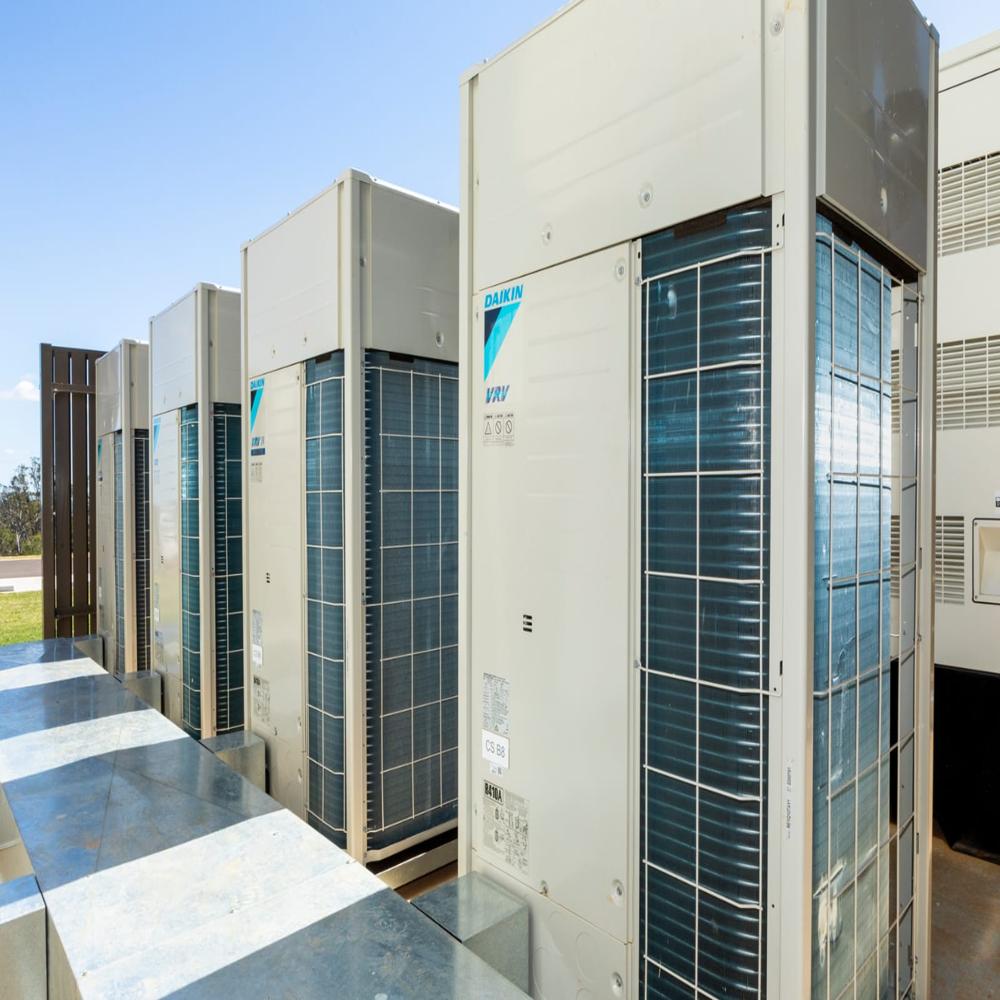
Scenario: Mid-Size IT Office in Gurgaon
Challenges Before AI Integration:
-
Uneven cooling across floors
-
High electricity bills
-
Overloaded compressors during peak hours
-
Frequent service complaints
AI-Driven Improvements:
-
Heat Load Prediction
AI studies occupancy trends and sun exposure patterns. -
Zonal Smart Control
Cooling is distributed based on real-time requirement. -
Peak Load Management
System moderates non-critical areas during high tariff hours. -
Predictive Fault Alerts
Maintenance teams receive early warnings for pressure drops or airflow reduction.
Results Achieved:
-
12–18% reduction in energy consumption
-
Improved indoor comfort
-
Extended compressor life
-
Reduced emergency maintenance
For Indian facility managers, this directly translates into cost savings and improved asset performance.
Industry Impact: How AI Is Reshaping HVAC in India
1. Shift from Equipment Sales to Intelligent Solutions
Clients now demand:
-
Energy performance reporting
-
Lifecycle cost analysis
-
Smart monitoring dashboards
-
Sustainability compliance support
HVAC companies must deliver measurable efficiency — not just installation.
2. Rise of Smart Annual Maintenance Contracts (AMC)
AI enables data-driven AMC services by:
-
Tracking system health remotely
-
Scheduling preventive visits based on actual performance
-
Reducing unnecessary service calls
This creates better service reliability for clients and stronger long-term relationships.
3. Support for Green Building & ESG Goals
With growing focus on:
-
Energy audits
-
Green building certifications
-
Carbon footprint reduction
AI-powered HVAC systems help commercial projects meet sustainability benchmarks.
Why Businesses Should Upgrade to AI-Enabled HVAC Systems
Upgrading to AI-integrated HVAC systems provides:
-
Faster ROI through energy savings
-
Better indoor air quality control
-
Reduced operational stress
-
Improved system lifespan
-
Real-time monitoring capabilities
In competitive markets, energy-efficient infrastructure becomes a strategic advantage.
The Role of Climco HVAC in Smart Cooling Solutions
At Climco HVAC, we specialize in:
-
Intelligent HVAC system design
-
VRV / VRF installations
-
Commercial HVAC optimization
-
Energy-efficient retrofitting
-
Smart maintenance solutions
Our approach combines engineering expertise with modern control technologies to deliver efficient, reliable, and future-ready HVAC systems for Indian businesses.
Conclusion: The Future of HVAC in India Is Intelligent
Artificial Intelligence is no longer an optional add-on in the HVAC industry — it is becoming a standard requirement for energy-efficient commercial and industrial infrastructure.
As India’s cooling demand continues to grow, AI-driven HVAC solutions will play a critical role in reducing energy consumption, improving comfort, and enhancing system reliability.
Climco HVAC is committed to delivering intelligent climate solutions that align with India’s energy and sustainability goals.
Frequently Asked Questions (FAQs)
Q1. How does AI reduce HVAC energy consumption?
AI analyzes occupancy, weather, and usage patterns to optimize compressor speed and cooling cycles, reducing unnecessary power consumption.
Q2. Is AI-enabled HVAC suitable for small commercial buildings?
Yes. Even mid-size offices and retail spaces can achieve significant energy savings with smart controls.
Q3. What is the ROI of AI in HVAC systems?
Most commercial installations see measurable energy savings within the first year, depending on load profile and usage pattern.